Measuring Changes in Fracking Fluid with New Ultrasonic Technology
SoundWater Technologies recently developed a new product to mark changes in fracking fluid using ultrasound. This new technology may replace the traditional radioactive densometer -- removing the risk to human health, as well as red tape from the job site. It is also installed outside the pipe — so it doesn’t contact the fluid and won’t wear out.
Until now, a densometer has typically been used to mark sand presence and measure fluid density in fracking processes. These densometers come with the associated complications of dealing with a radioactive device on
the job site. The high cost and complication of densometers drove the need to pursue new technology.
The new ultrasound technology works by transmitting a burst of ultrasound into the pipe and fluid and measures the amount of energy that comes out the other side. The energy lost within the fluid is related to the fluid’s properties and any particulates inside the fluid. As the fluid changes, say from water to acid, the ultrasound energy changes and the presence of acid may be identified. Similarly, as the sand concentration changes or particle sizes change, there is a corresponding change in ultrasonic energy lost. When the ultrasound energy is then charted during a fracking stage, a human eye may easily identify changes in sand concentration and/or fluid changes.
The output of the ultrasound measurement looks similar to the output of the densometer, but the actual units of measurement are not the same. SoundWater's flowmeter technology is presenting customers with "inverted acoustic energy loss" which does not sound directly meaningful until you see the data on a chart (Figure 1). At first glance, you will see that the trend in the data looks remarkably similar to the old densometer trendline.
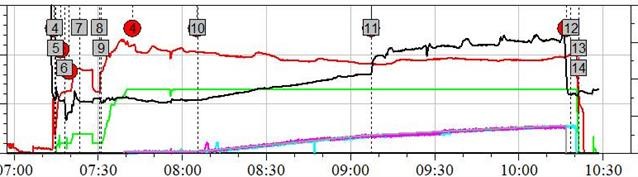
Figure 1
Figure 1 displays the flowmeter ultrasound energy measurement (black line) against other process measurements (pressure/red, velocity/green, calculated density/purple). So, while you cannot pull out a density measurement from the ultrasound trend line, you can mark the presence of sand and/or changes to the sand concentration, or changes to the fluid as they are happening.
For the sake of clarity, let's look at a few specific points in Figure 1. Initially, there is no sand and no water in the pipe, so the black line is off the chart (no data). At point 4 fluid starts, at point 5 acid starts and ends at point 7 (you can see the blip on the ultrasound output). Point 10 is where the sand hits the flowmeter, and gradually the sand concentrations are stepped up to point 12. At point 11 the sand type was changed from 100 mesh to 40/70 (larger particle size) resulting in more signal loss. After the sand cleared (point 12), you can see the ultrasound output drop back down to the no sand level that it was at initially (points 4 and 5).
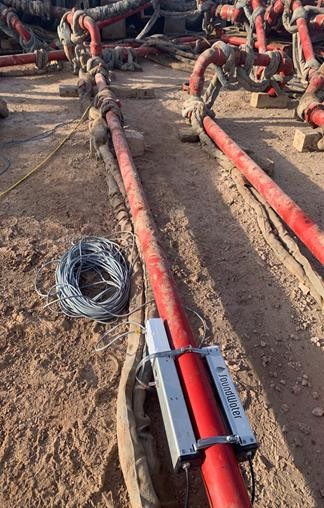
In addition to marking fluid changes, our flowmeter is measuring flow at the same time. Keep in mind that this is all done from outside the pipe - ultrasound is passing through the pipe to measure the fluid flowing inside.
Therefore, our Cypress ultrasonic flowmeter is now providing both flow measurements and marking fluid process changes - all from outside the pipe where it avoids hazards of high pressure and direct contact to the destructive force of high-speed sand.
It is a great fit for fracking on multiple fronts:
1. it is not harmful to humans
2. it doesn't contact the fluid so is not prone to destruction from sand blasting and high pressures and high speed fluids,
3. it indicates flow and marks process changes,
4. and it can be installed quickly between stages if needed.
With high speed fluids, variable materials and high pressures, this was a fun and challenging project for SoundWater. We were engaged and excited to work on this problem and happy to go the extra mile to provide this solution.
